That 'Nootropic' Might Just Be a Caffeine Pill in a Disguise
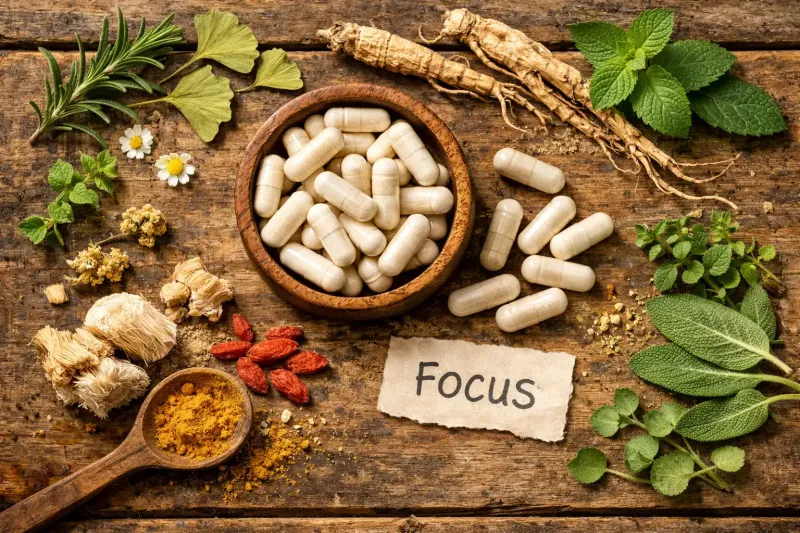
Photo: nootropic supplement bottles next to cup of coffee on wooden table, via nutriscan.app
Walk down the supplement aisle at any Target, GNC, or your local vitamin shop and you'll see them: sleek black bottles with brain graphics promising 'laser focus,' 'flow state,' and 'limitless cognition.' Some of these nootropic formulas are genuinely interesting. A lot of them, though, are doing something sneakier — they're charging you $40 for what's essentially a well-dressed caffeine pill.
We're not anti-caffeine here at SupplementFind. We're anti-paying-premium-prices-for-coffee. So let's break down how to tell the difference.
The Caffeine Shell Game
Here's the trick to watch for: many focus supplements don't list plain 'caffeine anhydrous' on the label. Instead, you'll see ingredients like:
- Green tea extract (Camellia sinensis) — contains natural caffeine, usually 25–50mg per concentrated dose
- Green coffee bean extract — same deal, caffeine included
- Yerba mate — a trendy caffeine source with a health halo
- Guarana — the sneaky one, because guarana seeds are roughly 2–4% caffeine, far more concentrated than coffee beans
- Theacrine (TeaCrine) — a caffeine cousin that works on similar pathways and often stacks with it
Individually, each looks like a modest dose. Stack four of them together and you've got 200–300mg of total caffeine — the same as two large coffees from Dunkin' — buried under exotic-sounding names.
Quick math check: If a 'focus blend' contains 300mg of green tea extract, 150mg of guarana, and 100mg of green coffee bean, you're likely getting somewhere north of 100mg of caffeine total. That's a medium cup of coffee with a markup.
How Popular 'Brain Boosters' Stack Up
We looked at the caffeine-equivalent content across the categories flooding US shelves:
| Product type | Typical caffeine equivalent | Coffee comparison |
|---|---|---|
| Nootropic 'focus' capsules | 100–250mg | 1–2.5 cups |
| Energy-adjacent 'adaptogen' blends | 75–150mg | About 1 cup |
| Pre-workout nootropic hybrids | 150–350mg | 2–3.5 cups |
| 'Clean energy' gummies | 40–80mg | Half a cup |
The gummies are almost honest about it — small dose, small price. The capsules are where the gray zone lives: premium pricing, vague dosing, and a buzz that comes overwhelmingly from stimulants rather than the L-theanine-and-lion's-mane story on the front of the bottle.
The Ingredients Worth Actually Paying For
Not everything in these formulas is window dressing. When we evaluate a focus supplement, here's the evidence hierarchy we use:
Strong evidence: Caffeine itself (yes, it works — that's the problem), L-theanine at 100–200mg (smooths caffeine's jitters and may improve attention), and creatine for cognitive fatigue, especially in sleep-deprived people.
Promising but inconsistent: Bacopa monnieri (needs 8–12 weeks of daily use, not an acute boost), Rhodiola rosea for mental fatigue, and Panax ginseng in some studies.
Thin evidence at typical doses: Most mushroom blends, lion's mane 'stacks,' and anything dosed below what studies used.
Your Three-Question Framework
Before you buy any focus supplement, ask:
- Could I get this effect from coffee? If total caffeine equivalent is under 150mg and the rest is underdosed herbs, the answer is probably yes.
- Are doses disclosed? Proprietary blends hiding behind a 'Focus Matrix 850mg' label are a red flag we've covered before — if you can't see individual doses, you can't compare to research.
- Is the non-caffeine part actually dosed? L-theanine at 50mg in a blend? Skip it. At 200mg standalone? That's a real formula.
Sometimes the honest answer is that a $4 bag of good coffee beans plus a cheap L-theanine capsule beats a $45 'cognitive enhancement complex.' Your wallet — and your afternoon crash — will thank you.