We Lab-Tested a Dozen Vitamin D3 Bottles — The Cheap Ones Had Nothing to Worry About
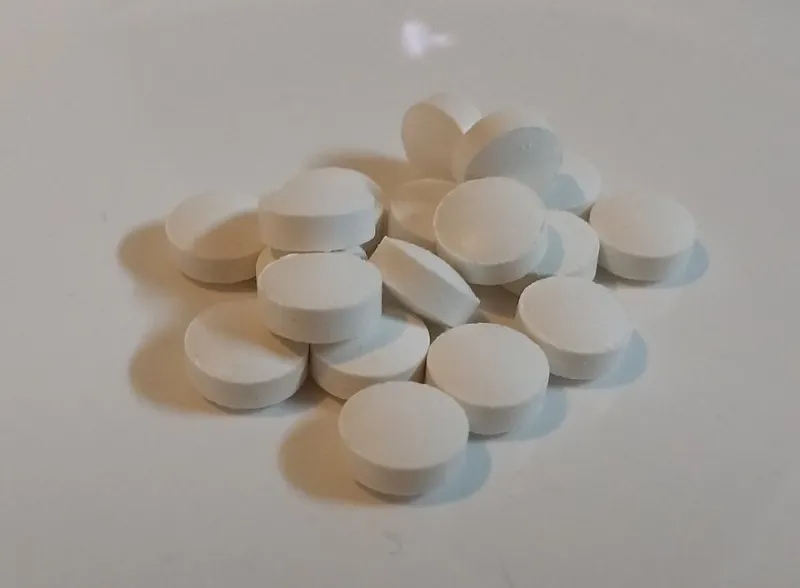
Photo: Mx. Granger, CC0, via Wikimedia Commons
Vitamin D3 might be the least exciting supplement in America — and that's exactly why it's the perfect one to test. It's a single-ingredient product. There's no proprietary blend to hide behind, no exotic adaptogen to explain away. Either the capsule contains what the label says, or it doesn't.
So we ran the most boring experiment imaginable: we bought 12 popular vitamin D3 products, from a $3.49 drugstore house brand to a $45-per-bottle subscription service with minimalist packaging and a wellness podcast following, and sent every one of them to an independent lab for potency and purity testing.
The spread between the cheapest and priciest bottle was roughly 13x. The quality gap? Nowhere close to that.
How We Set Up the Test
We purchased every bottle at full retail — no free samples, no brand-sent boxes. Our cart covered three tiers:
- Pharmacy and warehouse staples: house brands you'd grab on a Costco or CVS run
- Amazon bestsellers: the top-ranked bottles with tens of thousands of reviews
- Premium DTC brands: the ones with terracotta color palettes and $45 price tags
Each bottle went, unopened and in its original packaging, to a third-party lab for testing against label claims for D3 content, plus screens for lead, cadmium, and arsenic. We also asked for a basic disintegration check, because a capsule that never breaks down in your gut is just an expensive way to decorate your bloodstream with nothing.
One caveat up front: this is a snapshot. A single bottle from a single batch. Supplement manufacturing varies, and a great result today doesn't guarantee every bottle off that line is identical. But when a brand nails it at $4 and another whiffs at $45, that's worth talking about.
What the Lab Actually Found
Here's the headline: 10 of 12 bottles landed within the acceptable potency window — generally 90% to 120% of label claim, the standard the industry and regulators work with.
The two misses were instructive.
One was a mid-priced Amazon bestseller that came in around 68% of its labeled D3 content. Not dangerous, but you'd need to take roughly one and a half capsules to get the dose you think you're getting. The other was one of our premium picks — a brand that markets itself on obsessive quality — which tested fine for potency but carried a softgel that failed the disintegration check, dissolving far slower than it should.
Meanwhile, the cheapest bottle in the entire lineup? It tested at 103% of label claim, passed every heavy metal screen, and disintegrated on schedule. Total cost: under four dollars.
The Price Gap Is a Marketing Gap
Nobody should be shocked that vitamin D3 itself is cheap. It's one of the most commoditized ingredients in the industry — the raw material costs pennies per thousand IU. What you're paying for at the high end is packaging, storytelling, subscription convenience, and in the best cases, real third-party certification.
And that last one matters. The premium brands that earned their price did so because they carry seals like USP or NSF and publish their lab results openly. The premium brands that didn't earn it were selling the same molecule with better lighting.
If a company charges 10x the pharmacy price, the burden of proof is on them — and 'our founder developed this after a yoga retreat' is not a certificate of analysis.
How to Shop Your Own Vitamin D Aisle
You don't need to ship bottles to a lab to make a smart choice. Here's what our results taught us:
1. Check for third-party certification first. A USP, NSF, or Informed Choice seal on the label is the single best shortcut for knowing a bottle was independently verified. Several of our top performers had one; both of our underperformers didn't.
2. Ignore the IU arms race. More isn't better — 1000 to 2000 IU daily covers most adults who don't have a diagnosed deficiency. Megadose 10,000 IU products aren't 'extra strength,' they're a different conversation you should have with your doctor.
3. D3 beats D2. Cholecalciferol (D3) is consistently more effective at raising and maintaining blood levels than ergocalciferol (D2). Read the fine print; some vegetarian formulas use D2.
4. Match the format to your body. D3 is fat-soluble, so softgels or liquid caps taken with a meal absorb well. If you take a daily fish oil or omega-3 anyway, pairing them is an easy win.
5. Price is a terrible proxy for quality. Our lab data made this painfully obvious. The correlation between what we paid and what we got was, generously, weak.
The Bottom Line
For a single-ingredient supplement like vitamin D3, the pharmacy house brands and warehouse club bottles aren't the budget option — they're the default smart option. Spend your 'extra' money on a blood test instead: ask your doctor for a 25-hydroxyvitamin D panel, find out where you actually stand, and dose accordingly.
That $45 bottle won't tell you if it's working. Your bloodwork will.