Ask for the Paperwork: A Plain-English Walkthrough of Reading a Supplement CoA Yourself
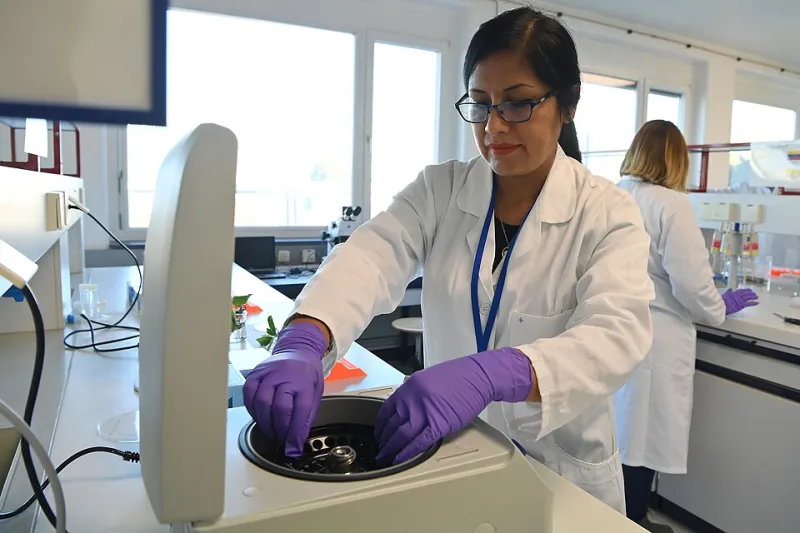
Photo: IAEA Imagebank, CC BY 2.0, via Wikimedia Commons
Every supplement review site (ourselves included) loves to point at third-party certifications like they're a gold star. NSF, USP, Informed Choice — great stuff, genuinely. But here's the thing nobody tells you: plenty of solid products never bother with those programs, and plenty of mediocre ones hide behind marketing language like "lab tested" without ever defining which lab, which batch, or which test.
There's a document that cuts through all of it, and it's called a Certificate of Analysis, or CoA. It's the actual lab report for a specific production run. And unlike a marketing seal, you can learn to read one yourself in about twenty minutes.
First, Ask for It (and Watch How They Respond)
Here's the step most shoppers never take: email the brand and request the CoA for your specific batch. Not a generic "we test everything" PDF — the report tied to the lot number printed on your bottle.
How a company handles that request tells you a lot before you even open the attachment. A transparent brand sends it within a few business days, no interrogation. A hesitant brand asks why you want it, or sends a document with the batch number conveniently cropped out. And silence? That's an answer too.
Find the lot or batch number on your container first — usually stamped near the expiration date. If the CoA they send doesn't match that number, you've learned nothing about your actual bottle.
The Parts of a CoA That Actually Matter
A real CoA can look intimidating, so let's break down the sections worth your attention.
The header. This should list the product name, the batch or lot number, the manufacturing or test date, and who submitted the sample. Check that the lot matches your bottle and that the test date is reasonably recent — a report from three years ago tells you little about today's production.
The testing lab. Look for the name of the laboratory that ran the analysis. Ideally it's an independent third-party lab, not the manufacturer testing its own product. Well-known US labs include Eurofins, NSF International, and various ISO-accredited regional labs. If the "lab" turns out to be the brand itself, treat the results as a starting point, not proof.
The methods. Somewhere on the document you'll see references like "AOAC 2015.06" or "USP <233>" — these are standardized testing methods, essentially published recipes for how to measure a given compound. You don't need to memorize them. What matters is that they're listed at all. A CoA with no method reference is like a recipe card that just says "cook it."
The results table. This is the heart of the document. For a protein powder, you'll see protein, fat, carb values. For a vitamin, you'll see measured amounts of each nutrient per serving. Compare these against the label claims. Small deviations are normal — labs generally accept roughly plus-or-minus 10% on many nutrients. But if a pre-workout claims 3,000 mg of citrulline and the lab found 1,200 mg, you've caught a real problem.
Heavy metals and contaminants. For products with ingredients prone to contamination — greens powders, herbal extracts, cocoa-based anything — look for lead, arsenic, cadmium, and mercury results, usually reported in micrograms. These should be below California's Prop 65 thresholds or the tighter limits set by USP standards. A number isn't automatically dangerous just because it's nonzero; the units and limits matter.
Red Flags That a CoA Is Window Dressing
Not all certificates are created equal. Watch for these warning signs:
- No batch number. A document that could describe any tub of powder ever made describes none of them.
- "Pass/fail" with no numbers. You want the actual measured values, not a thumbs-up.
- The lab section is blank or generic. "Tested in-house" or a logo you can't verify means the results are only as trustworthy as the company's word.
- Microbial or contaminant panels missing entirely. A CoA that only confirms the ingredient list while skipping heavy metals is doing half the job.
- Photoshop vibes. Yes, people fake these. Cross-check the lab's letterhead, contact info, and whether the lab actually exists.
What a CoA Can't Tell You
Fair is fair — the document has limits. It reflects one batch, not the bottle sitting in a hot warehouse for eight months. It typically doesn't verify bioavailability (whether your body absorbs the form of the nutrient). And for proprietary blends, a CoA might confirm the blend's total weight without revealing how much of each ingredient is inside.
That last one is why we keep beating the proprietary-blend drum: no amount of lab paperwork fully rescues a formula that won't disclose doses.
Make It a Habit, Not a Chore
You don't need to audit every supplement you own. But for anything you take daily — a multivitamin, a protein you buy by the five-pound bag — one email is worth the effort. Save the CoA, match it to your lot number, and re-request when you buy a new batch.
The supplement industry runs on trust that most brands haven't earned. A Certificate of Analysis isn't a guarantee of a great product, but it's the closest thing to a receipt you can get. And unlike a marketing claim, it's something you can actually read.