Gummy Vitamins: Candy With a Multivitamin Problem (or a Multivitamin With a Candy Problem?)
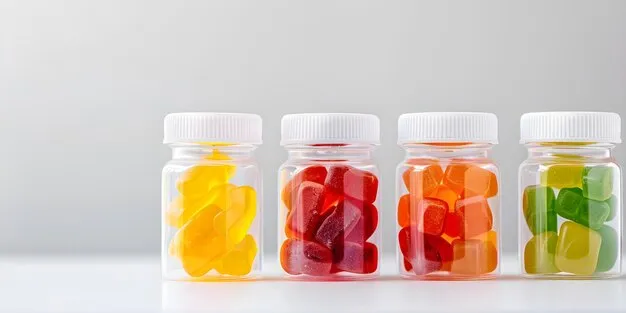
Photo: colorful gummy vitamins spilling from bottle on white background, via img.freepik.com
Walk down the supplement aisle at any Target, Walmart, or CVS in America and you'll notice something: the gummy section keeps growing. What started as a handful of kids' chewables has exploded into an entire wall of adult gummy multivitamins, fiber chews, melatonin gummies, and hair-skin-nails blends that look suspiciously like the candy rack two aisles over.
And honestly? We get the appeal. If a gummy gets someone to take their vitamin D consistently, that's a win. But gummies come with real trade-offs — sugar content, dosing accuracy, and shelf stability — that most labels don't exactly advertise. Here's what to know before you stock up.
The Sugar Math Nobody Does
Most gummy vitamins contain between 2 and 8 grams of sugar per serving. That doesn't sound like much, but run the numbers: take a daily gummy multivitamin with 5 grams of sugar and you're adding roughly 1,800 grams — nearly four pounds — of added sugar to your year. For a product marketed as a health purchase, that's worth a pause.
The fiber gummy category deserves special scrutiny here. Fiber supplements exist to help people hit a daily target most Americans miss by a mile. But many popular fiber gummies deliver just 3 to 5 grams of fiber per serving alongside several grams of sugar — meaning you'd need multiple servings (and a serious sugar load) to approach the amount in a single scoop of psyllium husk powder. You're often paying premium prices for more candy and less fiber.
A few brands have moved to sugar-free formulations using stevia, monk fruit, or sugar alcohols like maltitol. These solve the sugar problem but introduce a new one: sugar alcohols in the quantities found in several gummies can cause bloating and digestive upset, which is a particularly awkward side effect for a product you're taking for digestive health.
The Dose Accuracy Problem
Here's the issue most shoppers have never heard of: gummies are genuinely harder to manufacture accurately than tablets or capsules.
Pills are essentially compressed powder — measuring the active ingredient is straightforward. Gummies are a gel matrix of pectin or gelatin, water, sugar or sweeteners, flavoring, and heat-sensitive nutrients. During production, the mixture has to be heated, poured, and cooled, and nutrients can degrade or distribute unevenly along the way.
This isn't paranoia. Independent testing labs have repeatedly found gummy supplements with actual nutrient contents wildly off from their labels — sometimes significantly over, sometimes dramatically under. ConsumerLab and similar third-party testers have flagged gummies more frequently than pills for label accuracy issues. Vitamin D and B12 tend to be the common offenders, sometimes showing up at a fraction of the listed amount.
Some brands have responded by reformulating to include more nutrient than the label claims, which fixes one problem and creates another: gummies that deliver several times the labeled dose of certain nutrients aren't great either, especially for fat-soluble vitamins.
Heat, Humidity, and Your Bathroom Cabinet
Gummies are also the most fragile supplement format on your shelf. They're semi-moist, which means they're the only vitamin format where microbes can theoretically grow, and their texture depends on a delicate water balance.
Leave gummies in a hot car, a humid bathroom, or a steamy kitchen and you'll see it yourself: they melt into a blob, sugar blooms white on the surface, or they turn into a sticky brick. Beyond the cosmetic issues, that heat exposure accelerates nutrient degradation. Vitamin C is notoriously unstable in gummy form — heat and moisture break it down over time, so a gummy that tested at 100% of its label on the factory floor may contain substantially less by the time you finish the bottle.
Melatonin gummies raise similar concerns. Melatonin is already a category with notorious dose-accuracy problems, and the gummy format adds degradation risk on top. If you're using melatonin, a tablet or capsule from a brand with third-party testing is the more reliable bet.
Pills and capsules, by contrast, are shelf-stable for years when stored sensibly. That's not a marketing point — it's chemistry.
When Gummies Actually Make Sense
We're not here to tell you to throw out your gummies. There are legitimate cases where the format wins:
- Swallowing pills is a genuine barrier. Millions of adults struggle with pills, and a supplement you actually take beats a superior one you avoid.
- Absorption considerations for specific nutrients. Some nutrients, like certain forms of B12, may be absorbed reasonably well from the mouth's tissues as you chew.
- Consistency beats perfection. A decent gummy taken daily beats an optimal capsule that sits untouched in the cabinet.
What to Look For: A Quick Shopping Guide
If you're buying gummies, shop smarter with this checklist:
- Check the sugar line first. Look for options under 3 grams per serving, or sugar-free versions sweetened with stevia or monk fruit if you tolerate them.
- Demand third-party certification. Given gummies' dose-accuracy track record, a USP, NSF, or Informed Choice seal matters more here than in any other format. If a brand doesn't publish testing results, that's a red flag.
- Do the serving math on fiber gummies. Compare cost and sugar per gram of actual fiber, not per gummy. You may find a powder or capsule is dramatically better value.
- Skip gummies for melatonin and vitamin C if dose precision matters to you — choose capsules or tablets instead.
- Store them like food, not supplements. Cool, dry, sealed tightly — and toss them if they've melted or fused.
The Bottom Line
Gummy vitamins aren't a scam — they're a format with real compromises. You're trading some dose reliability, shelf stability, and (often) sugar content for the sake of palatability. For some people, that trade is absolutely worth it. For others, especially anyone counting sugar or relying on precise doses, a capsule remains the smarter buy.
The vitamin aisle doesn't have to be a guessing game. Read the label, check for a testing seal, and pick the format you'll actually stick with — whether that's a gummy or something a little less delicious.